The old payroll model is deal - What every leader can learn from the construction industry
I spend most of my working week inside construction and industrial workforces, and one thing has become obvious to me over the years: a head contractor is rarely managing one workforce. You are managing your own people, your subcontractors, your subcontractors' subcontractors, and increasingly, offshore teams several layers removed from any direct payroll relationship. If something goes wrong four layers down that chain, it can still land on your desk. The old model, where if a worker isn't on your payroll then they're not your problem, is dead. It is your problem now.
Construction has honestly been a little slow to modernise how we manage this. But we're catching up fast. It's galloping now, compared to five years ago. What I keep seeing, though, is manufacturing, distribution and IT businesses scaling quickly or offshoring for the first time running headlong into the exact same structural problem construction is only now getting on top of, without the years of hard-won experience we've built up.
Why this matters now
Offshoring and multi-tier subcontracting used to be a construction and manufacturing story. That's no longer true. IT and SaaS businesses run offshore support and development centres. Distribution businesses are offshoring parts of their operations too. Each of these arrangements creates the same underlying condition construction has had to manage for years: a workforce spread across multiple employers, multiple systems and multiple jurisdictions, with compliance obligations that don't stop at the edge of your own payroll.
This isn't hypothetical. Wage theft is now a criminal offence under the Closing Loopholes Act, with penalties that include imprisonment for intentional underpayment. That exposure doesn't stay neatly confined to one tier of a supply chain when the systems and data behind it are fragmented across several employers.
The mechanics I see businesses get wrong
Three structural problems come up again and again, whether the sector is construction, manufacturing or IT.
Fragmented data across systems. Subcontractors run their own rostering, time and attendance, and payroll tools, and that data doesn't flow up automatically. As a head contractor or parent business, you can be several steps removed from knowing whether a subcontracted worker's hours, entitlements or certifications are compliant, simply because the information sits inside someone else's system.
Compliance obligations that travel down the chain and back up it. Award and agreement obligations, safety certifications, entitlement calculations, they don't stop applying just because a worker is engaged through a third party. Construction has learned this through hard experience with payroll and compliance implementations going wrong. Businesses adopting subcontracting or offshore models at pace right now are exposed to the same obligations without the same institutional memory to fall back on.
No single point of visibility. When time and attendance, rostering, payroll and compliance all sit in separate systems across separate employers, there's no one place to see whether the whole chain is actually compliant. The construction businesses that have got on top of this have done it by prioritising integration and usability at every tier, from the smallest subcontractor's system through to head contractor reporting, rather than assuming one off-the-shelf platform would cover every layer.
Where I see other sectors get this wrong
The most common mistake is treating multi-tier workforce risk as a procurement problem rather than a systems problem. A business offshoring its IT support desk or bringing on a distribution partner will often check contracts and insurance, then assume the workforce management side sorts itself out. It doesn't. If the offshore partner's timekeeping and payroll data doesn't integrate with your compliance oversight, you've taken on the same visibility gap construction has spent years trying to close.
The second error is scaling headcount or supplier relationships faster than the systems that track them. A 200-person business with two or three vendor relationships can manage compliance manually. A 2,000-person business with a dozen subcontractors and an offshore team can't, and yet a lot of businesses don't upgrade their workforce systems until an audit or an underpayment issue forces the point.
What good multi-tier workforce compliance looks like
The more mature operators I work with treat multi-tier workforce visibility as a design requirement, not an afterthought. That means:
- Requiring subcontractor and offshore partner data to integrate with a central compliance and reporting layer, rather than living in isolated systems.
- Building award and agreement interpretation logic that applies consistently no matter which tier of the chain a worker sits in.
- Auditing the full chain periodically, not just the direct employment relationship, to confirm entitlements, certifications and hours are being tracked correctly at every level.
- Treating usability as a compliance feature. If a subcontractor's system is too clunky to use properly, data quality suffers, and that failure travels straight up the chain.
Construction is the lens I trust most, and I'd say the same thing to manufacturing, distribution or IT leaders that I'd say to a construction client: go ask the people already managing dispersed, hard to see workforces how they got on top of it, before you find out the hard way. Construction has had to solve this earlier than most, simply because we've never had a choice. That experience is worth borrowing rather than rebuilding from scratch.
Off the back of that conversation
If your business is scaling into a more dispersed, harder to see workforce, it's worth asking now where your compliance visibility actually breaks down, rather than waiting for an audit to answer that question for you.
About Joe Collins
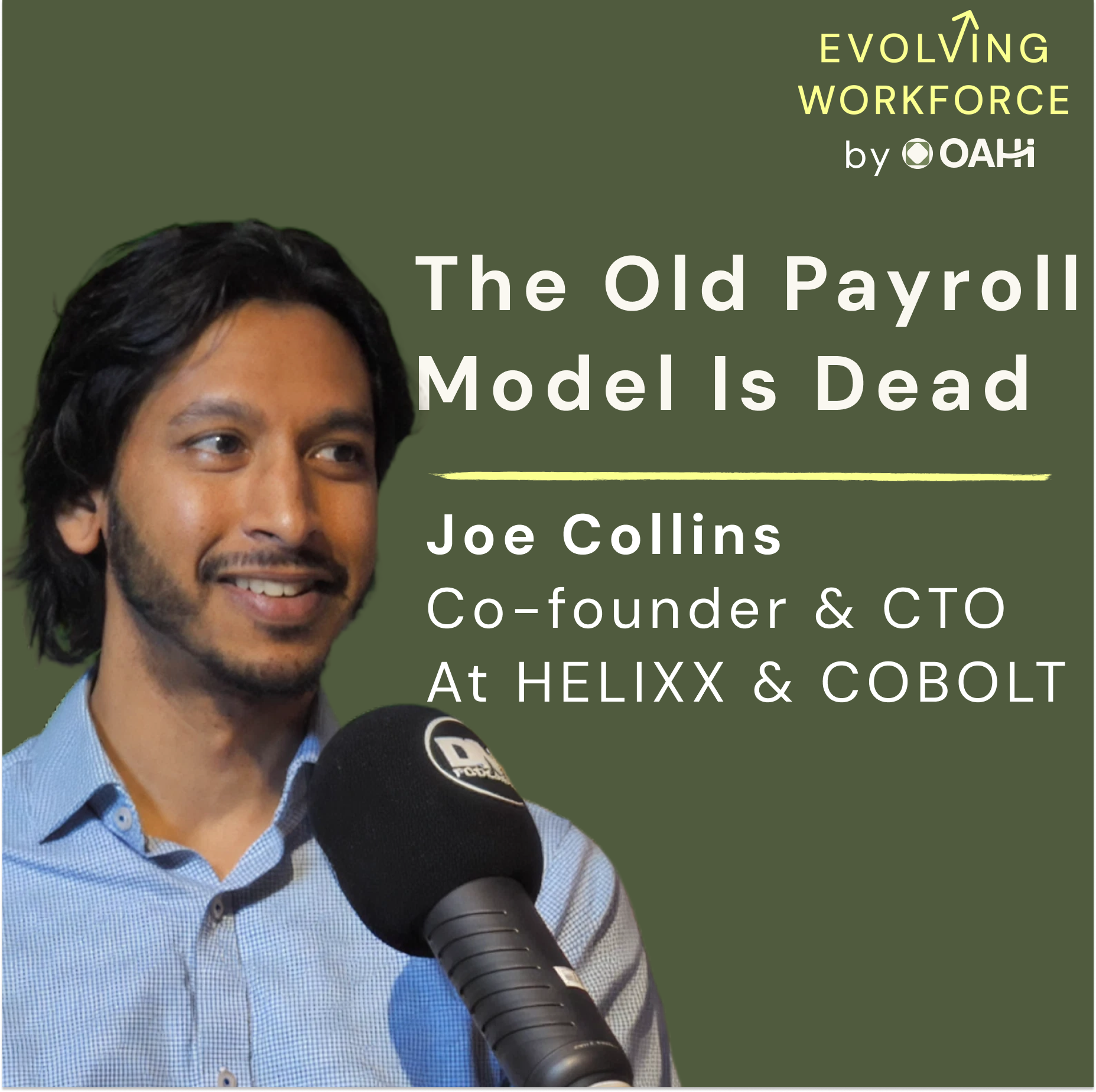
This piece is drawn from Joe Collins ' conversation with Dave Kenyon on OAHI I's Evolving Workforce podcast. Joe is the founder of Helixx, a workforce technology consultancy specialising in multi-site operations across construction and industrial sectors, built on a self-taught, hands-on career in the industry.
The visibility gap Joe describes above, compliance and data getting lost across subcontractor, offshore and multi-site layers, is exactly the problem OAHI's workforce management and award interpretation systems are built to solve: consistent compliance and visibility, no matter how many tiers a workforce is spread across. If you're expanding into subcontracting, multi-site operations or offshore arrangements, you don't need to rebuild that experience from scratch. Explore OAHI's workforce management solutions or book a demo.